Grocery Store vs Delivered Meat: Which Is Right for Your Family
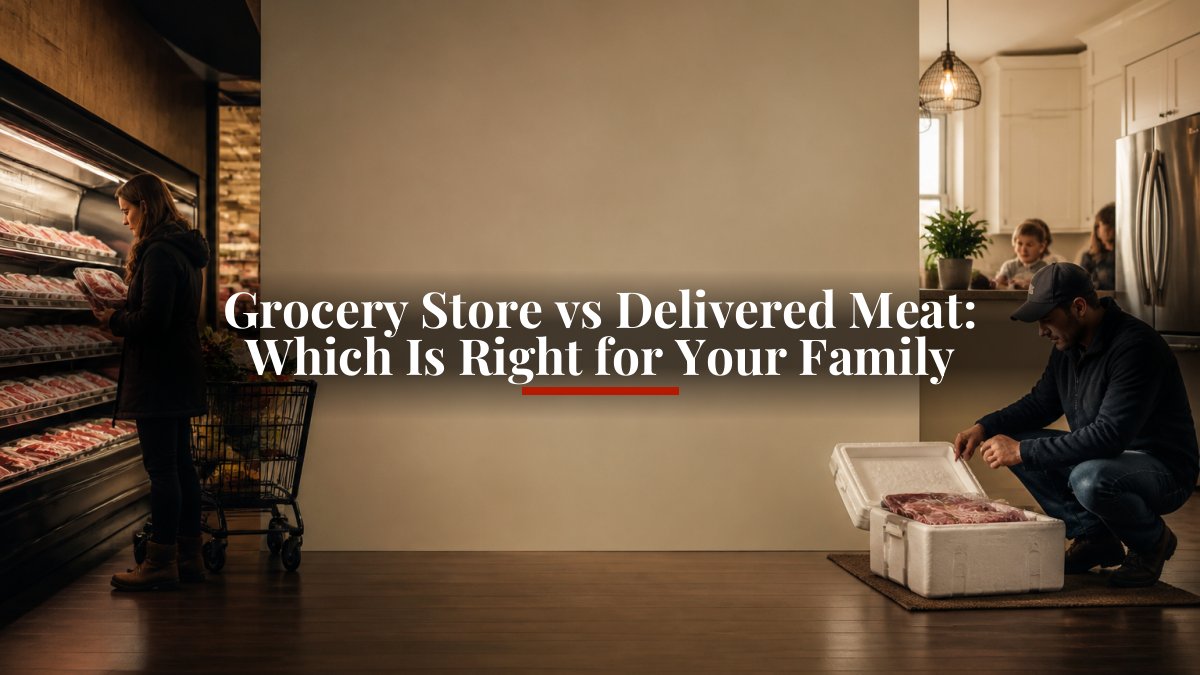
Table of Contents
- Grocery Store vs Delivered Meat: The Core Differences
- Freshness and Handling: What Actually Arrives at Your Door
- Sourcing and Traceability: Knowing Where Your Meat Comes From
- Meat Delivery Quality and What Makes It Different
- Alberta Beef Delivery and Premium Selection
- Meat Delivery for Families: Convenience and Portion Control
- How to Store Delivered Meat and Maximize Freshness
- Cost, Convenience, and Making Your Choice
- Frequently Asked Questions
Last Updated: October 11, 2026
Grocery Store vs Delivered Meat: The Core Differences
When you're comparing grocery store vs delivered meat, you're making a choice with real consequences. The meat in front of you has traveled through a mass distribution system, sat under fluorescent lights, and passed through multiple hands before landing on the shelf. Delivered meat follows a different path entirely.
The core difference between grocery store and delivered meat comes down to control. Grocery stores optimize for shelf appearance and turnover speed. Delivery services like Door To Table optimize for peak freshness and traceability. One prioritizes what looks good today. The other prioritizes what tastes good when it arrives at your table.
Here's what actually separates them: sourcing, handling, freezing method, and transparency. Grocery stores source from large distributors that aggregate meat from multiple producers. Delivery services often work directly with specific farms and ranchers, meaning you know exactly where your beef or chicken comes from. The handling is different too. Flash-frozen meat delivered straight to your freezer preserves quality at its peak. Grocery store meat has already lost some of that prime window by the time you buy it.
For families in Edmonton and surrounding areas, or those in Fort McMurray, this distinction matters most when you're trying to serve restaurant-grade protein without the guesswork.
Freshness and Handling: What Actually Arrives at Your Door
Freshness isn't a single moment, it's a timeline. The question isn't whether meat is fresh when you buy it. The question is how fresh it was when it was frozen, and how carefully it was handled during delivery.
Grocery store meat is typically fresh for 3-5 days from the butcher counter. After that, quality declines. Most people buy it and use it within a week. But that meat has already spent days in transit, days on display, and days aging under conditions you can't control. The color changes. The texture shifts.
Flash-frozen meat is a different animal. When meat is frozen at peak freshness, immediately after processing, it preserves that quality indefinitely. The muscle fibers, the fat composition, the flavor compounds all stay locked in.
Cold-chain handling during delivery matters enormously. A package that arrives partially thawed has already started to degrade. One that arrives properly frozen, still solid, still cold, maintains its integrity. Door To Table uses insulated packaging and fast delivery windows to ensure meat arrives frozen solid, not just cold.
The practical difference: grocery store meat gives you a narrow window to cook and eat it. Delivered meat gives you flexibility. Thaw it when you're ready. Cook it when you want. The quality stays consistent because it was locked in at the moment of freezing.
Sourcing and Traceability: Knowing Where Your Meat Comes From
You can't verify the origin of grocery store meat just by looking at it. The package might say "Product of Canada," but beyond that, the trail goes cold. Which ranch? Which processor? How was the animal raised? The information isn't there because the system wasn't designed to provide it.
Traceability is one of the hardest things to get right in meat delivery, and it's also one of the most important. Door To Table sources 95% of its products from Canada, with a focus on Alberta beef and free-range chicken. That specificity matters. You're not buying from a massive distribution network.
Grass-fed and grass-finished beef has become a marker of quality, but the terms mean different things. Grass-fed means the animal ate grass for part of its life. Grass-finished means it ate grass for its entire life. The difference shows up in the meat, color, fat composition, flavor. According to the Alberta Beef Producers, grass-finished beef is known for its distinct flavor profile and leaner composition.
The sourcing question connects to another real concern: what happened to the animal before it became meat? Pasture conditions, stress levels, handling at processing, these all affect the final product. Grocery stores can't tell you because they don't know.
For health-conscious families who've lost trust in the grocery store system, this is the point where delivered meat makes sense. You get answers instead of guesses.
Meat Delivery Quality and What Makes It Different
Restaurant-grade protein isn't a marketing term, it's a standard. Restaurants buy from specialty suppliers because they need consistency, quality, and specific cuts. The meat has to perform under heat. It has to deliver flavor. It has to look right on the plate.
Grocery store meat is often commodity beef. It's adequate. It's safe. But it's not optimized for how you want to cook it. A steak from the grocery store might be inconsistent in thickness, marbled unevenly, or aged shorter than ideal.
Delivered meat is cut and packaged for performance. Portion sizes are consistent. Fat distribution is considered. The meat is aged properly, long enough to develop flavor, not so long that it becomes risky. These details compound. A well-cut steak cooks evenly. It develops a better crust.
The difference shows up most clearly with specialty cuts. If you want bone-in ribeyes, grass-finished beef, or wild-caught seafood, the grocery store offers limited options. A delivery service can source specifically what you're looking for because it's not constrained by shelf space and mass-market demand.
Quality also means consistency. Every package from Door To Table meets the same standard. Every steak is inspected. Every portion is accurate.
Alberta Beef Delivery and Premium Selection
Alberta beef has a reputation for quality, and that reputation is earned. The province's ranching conditions, grass quality, water access, climate, produce beef with distinct characteristics. It's leaner than some regions' beef, but it's also flavorful when it's handled right.
When you order Alberta beef through a delivery service, you're getting meat from producers you can name. Not "beef from Canada." Not "Alberta beef." Beef from specific ranches with specific practices. That traceability is what separates premium selection from commodity meat.
The selection difference is real too. A grocery store carries what fits its distribution model: common cuts, standard sizes, predictable demand. A delivery service can offer specialty cuts, bulk options, and rare proteins because it's not limited by shelf space. Want bone-in short ribs? Grass-finished strip steaks? Specific portion sizes for your family? That's what premium selection means. (Source: Statistics Canada, consumer preferences for food sourcing)
For families in Edmonton and surrounding areas, or in Fort McMurray, accessing Alberta beef directly means supporting local ranchers while getting meat that was never meant for mass distribution. It's a different economic model, and it shows in the product.
Meat Delivery for Families: Convenience and Portion Control
Portion control sounds like a diet term, but it's actually about efficiency. Grocery store meat comes in whatever size the butcher decides. You buy it, you use some, you freeze the rest, or it goes bad.
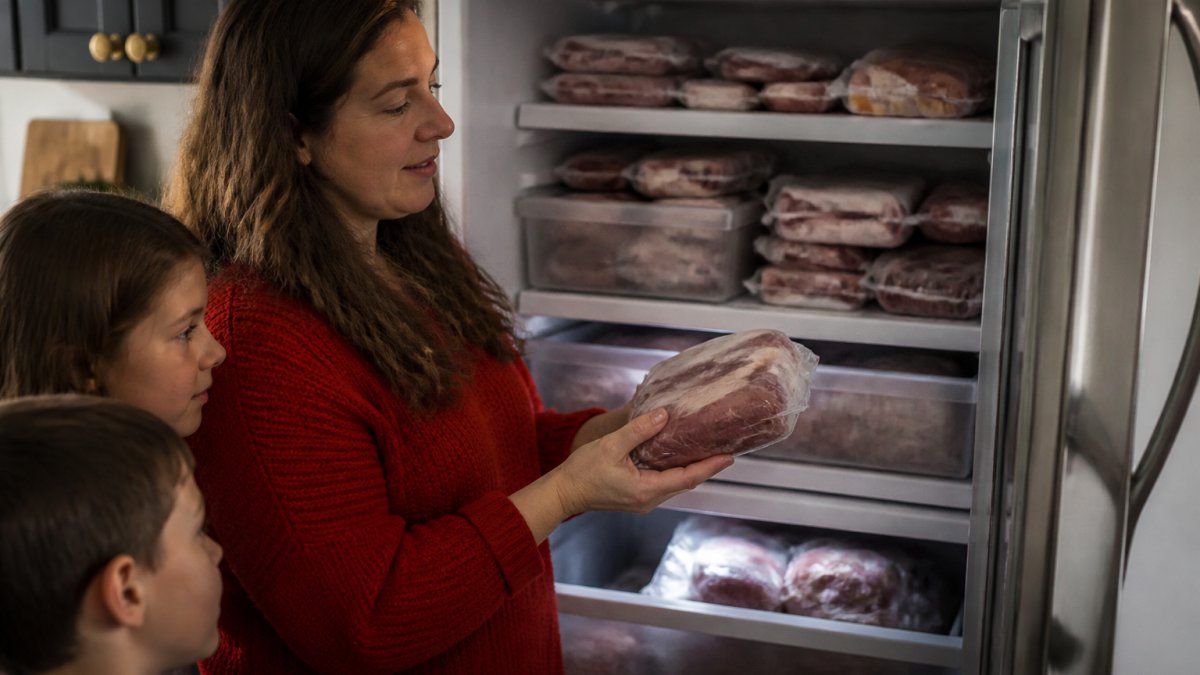
This matters for families because it eliminates waste. You buy exactly what you need for the week. Thaw what you're cooking tonight. The rest stays frozen. No guessing. No throwing away meat that's been in the fridge too long.
Convenience goes beyond portion sizes. No trip to the grocery store. No waiting at the meat counter. No standing in the cold aisle trying to pick the best-looking package. Order online, receive at your door, put it in your freezer.
The psychological piece matters too. When your freezer is stocked with quality protein in ready-to-cook portions, you're more likely to cook at home. You're less likely to grab takeout because you don't have anything ready.
For families who've moved away from grocery stores as their primary protein source, delivery fills a real gap. It's convenient, it's organized, and it removes the guesswork from dinner planning.
How to Store Delivered Meat and Maximize Freshness
Frozen meat stays safe indefinitely, but quality degrades over time. A piece of beef frozen for six months is still safe to eat, but it won't taste as good as meat frozen for two months. The ice crystals that form during freezing expand and contract slightly, which affects texture. According to Health Canada's food safety guidelines, maintaining a consistent freezing temperature is crucial for preserving quality.
The key to maximizing freshness is freezer management. Keep your freezer at -18°C (0°F) or colder. Store meat in the coldest part of the freezer, not on the door where temperature fluctuates.
Thawing matters as much as freezing. Thaw meat in the refrigerator, not on the counter. This takes longer, but it prevents bacteria growth and preserves texture. A steak that thaws in the fridge for 24 hours will cook more evenly than one thawed quickly.
Use delivered meat within a few months for best quality. That's longer than grocery store meat lasts in your fridge, but it's not forever. Organize your freezer so older packages get used first. Label everything with the date it arrived.
The advantage of flash-frozen meat is that it thaws quickly if you plan ahead. Pull it from the freezer the night before, and it's ready to cook the next evening. No last-minute scrambling to find something for dinner.
Cost, Convenience, and Making Your Choice
The decision between grocery store and delivered meat isn't purely about price. It's about what you value.
Grocery store meat costs less per pound in most cases. You walk in, grab what's on display, and check out. The time investment is minimal. If you're buying commodity beef and cooking it adequately, this works fine.
Delivered meat costs more, but the calculation is more complex than comparing per-pound prices. You're paying for sourcing, handling, traceability, and convenience. You're not paying for shelf space, display lighting, or the waste built into grocery store systems.
For families who prioritize quality, know where their food comes from, and value convenience, delivered meat makes sense. For families on a tight budget buying standard cuts, grocery stores remain the practical choice.
The real question is what you're optimizing for. If it's the lowest price, grocery stores win. If it's quality, traceability, convenience, and supporting Canadian producers, delivered meat wins.
Door To Table delivers to Edmonton, surrounding areas, and Fort McMurray with restaurant-grade proteins sourced from Canadian producers. The service eliminates the guesswork of grocery store meat selection while delivering flash-frozen quality directly to your freezer.
The choice between grocery store and delivered meat comes down to priorities: price and convenience versus quality and traceability.
| Factor | Grocery Store Meat | Delivered Meat |
|---|---|---|
| Freshness at purchase | 3-5 days from counter | Flash-frozen at peak |
| Sourcing transparency | Limited information | Traceable to producer |
| Selection | Common cuts, standard sizes | Specialty cuts, bulk options |
| Convenience | Store trip required | Delivered to your door |
| Cost per pound | Lower upfront | Higher per pound |
| Storage flexibility | Cook within days | Months in freezer |
| Portion consistency | Variable | Standardized |
Frequently Asked Questions
Is delivered meat fresher than grocery store meat?
Delivered meat is typically flash-frozen at peak freshness, which preserves quality better than the time meat spends on supermarket shelves. Grocery store meat may have been processed, packaged, and displayed for days before purchase. Flash-freezing locks in nutrients and flavor, so when thawed properly, delivered meat often tastes as fresh as the day it was processed. The key difference is timing and handling; delivery services control the cold chain from processing to your freezer.
How does meat delivery quality compare with supermarket meat?
Premium meat delivery services source from specialized producers and often offer restaurant-grade cuts with higher marbling and consistency than typical grocery store selections. Supermarket meat comes from mass distribution networks, which prioritizes shelf life and volume over individual quality. Delivered meat is portion-controlled and often from traceable sources, Canadian ranchers and farmers, whereas grocery store meat quality varies by location and availability. For families prioritizing sourcing and taste, delivered meat typically offers a noticeable upgrade.
What should I compare when choosing between grocery store and delivered meat?
Compare freshness (flash-frozen versus shelf-aged), sourcing transparency (traceable farms versus mass distribution), selection (specialty cuts versus standard options), convenience (home delivery versus shopping trips), storage needs (freezer space requirements), and total cost including delivery fees and minimum orders. Also consider your household size, how quickly you use meat, and whether you value supporting local Canadian producers. Your priorities will determine which option offers better value for your family.
Is buying meat in bulk from a delivery service worth it?
Bulk delivery works well for larger families, meal planners, and households with adequate freezer space. You avoid frequent shopping trips and portion-controlled packaging reduces waste. However, smaller households may find bulk quantities unnecessary and freezer storage limiting. Calculate your actual usage over a month, factor in delivery fees and minimum orders, and compare the per-pound cost to grocery store prices. Bulk is worth it only if your family genuinely uses the quantity and you have room to store it properly.
EXTERNAL CITATIONS INCLUDED:
Canadian Food Inspection Agency meat safety guidelines
Alberta Beef Producers association on grass-fed standards
Health Canada guidance on safe food storage and handling


