Benefits of Portion Controlled Meat Cuts
Table of Contents
- What Portion Controlled Meat Cuts Actually Are
- How Portion Control Supports Weight Management and Calorie Balance
- Meat Portion Sizes Per Person: Finding the Right Amount
- How to Portion Meat for Meal Prep Success
- Reducing Food Waste and Household Planning
- Safe Meat Thawing and Storage for Portion Controlled Cuts
- Why Pre-Portioned Meat Simplifies Healthy Eating
- Frequently Asked Questions
Last Updated: October 9, 2026
What Portion Controlled Meat Cuts Actually Are
Portion controlled meat cuts are pre-sized pieces of protein that match standard serving recommendations, so instead of guessing how much to use, you get exactly what one meal requires.
A standard chicken breast portion is about 100-150 grams, and a portion controlled cut arrives at that weight, ready to cook, no trimming, waste, or math required.
Most people serve themselves too much, and a typical dinner plate holds far more protein than the body needs.
The benefit goes deeper than convenience.
How Portion Control Supports Weight Management and Calorie Balance
Managing weight comes down to energy balance: consuming fewer calories than you burn.
Portion controlled meat cuts eliminate that guesswork. A pre-portioned cut of Alberta beef or free-range chicken delivers a known amount of protein and calories, so you never accidentally load your plate with twice what you intended.
Here's why this matters for weight management: most people underestimate portion sizes by 20-30%. A piece of meat that looks "about right" often contains significantly more calories than expected.
Protein also keeps you feeling full longer than carbohydrates or fats alone. Portion controlled meat cuts ensure you hit the right amount consistently, keeping hunger controlled through the afternoon.
For those managing diabetes or similar conditions, controlled portions of lean meat support stable blood sugar and consistent nutrient intake.
Meat Portion Sizes Per Person: Finding the Right Amount
The right amount of meat depends on age, activity level, diet, and goals, but the number most people get wrong is on the label: raw and cooked weight are not the same.
Meat loses water and fat during cooking, so a 150-gram raw chicken breast doesn't land on your plate at 150 grams.
A practical rule: decide whether you are planning in raw or cooked grams, then stay consistent.
Raw versus cooked: a working guide
These are common ranges, not medical prescriptions. Use them as a starting point and adjust to your goals.
| Cut | Typical raw portion | Approximate cooked yield | Notes |
|---|---|---|---|
| Chicken breast, boneless skinless | 125-175 g | 95-130 g | Moderate shrinkage; lean and protein-dense |
| Chicken thigh, boneless skinless | 125-175 g | 95-130 g | Slightly more fat, similar shrinkage |
| Lean beef steak (sirloin, strip loin) | 150-200 g | 110-150 g | Higher heat methods shrink more |
| Ground beef, lean | 125-150 g | 100-125 g | Fat drains off; weight loss varies with leanness |
| Pork loin chop | 150-175 g | 115-135 g | Bone-in yields less edible meat |
| Bison or elk | 150-175 g | 115-135 g | Very lean; can dry out if overcooked |
For most adults, a standard serving of cooked meat is about 75-100 grams, roughly a deck of cards. Active adults may go to 120-150 grams cooked; smaller individuals or those managing weight may stay near 75 grams.
Children need less: a child aged 4-8 needs about 40 grams of protein daily from all sources, which might mean a 30-50 gram cooked meat portion at dinner. Teenagers often match adult portions.
How cooking method changes the math
Shrinkage responds to heat, time, and moisture.
- Grilling and broiling: High direct heat drives off moisture quickly. Expect shrinkage toward the higher end of the range.
- Roasting and baking: Moderate, even heat. Shrinkage is usually in the middle of the range.
- Poaching, steaming, and sous vide: Gentle, moist heat. Shrinkage is lower, and the cooked weight stays closer to raw.
- Slow cooking and braising: Collagen breaks down and the meat may shred, but total weight still drops as fat and water render out.
If you are planning meals around a target cooked portion, start with more raw weight for high-heat methods and less for moist-heat methods.
Cut density matters too
Two 100-gram portions are not equally filling. Ground meat is denser and fattier per bite than whole muscle, so it can feel more satiating. Fattier cuts like ribeye or pork belly carry more calories per gram, while lean cuts like chicken breast, sirloin, and bison deliver more protein per calorie.
Portion controlled meat cuts take this complexity off your plate: the producer has already matched the cut size to standard serving recommendations, so you're not calculating shrinkage at 6 p.m.
How to Portion Meat for Meal Prep Success
Meal prep works best when portions are consistent. Inconsistent portions mean unpredictable calories and nutrients across the week. Portion controlled meat cuts solve this immediately.
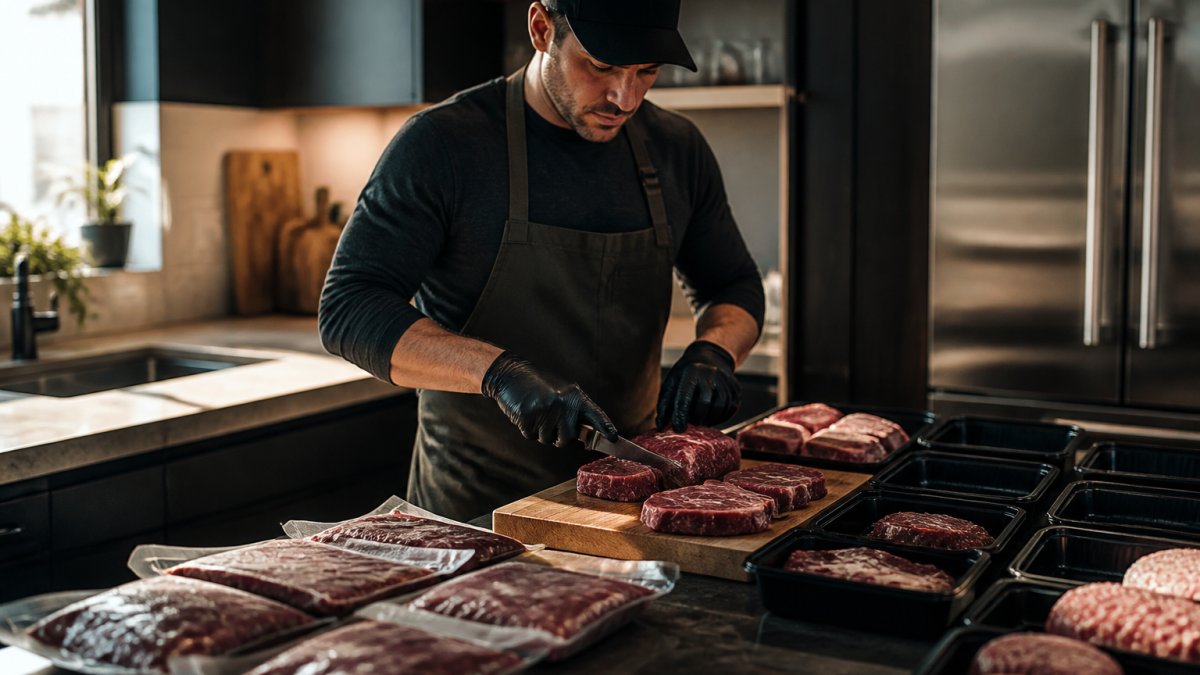
Start with a simple process:
- Plan your week, Decide how many meals you're prepping and what proteins fit your goals.
- Choose your cuts, Select portion controlled options that match your serving sizes. If you need 120-gram portions, buy cuts sized to that specification.
- Cook in batches, Prepare all your protein at once using your preferred method (grill, oven, pan). This saves time and ensures consistency.
- Cool completely, Let cooked meat reach room temperature before storing. This prevents condensation that can affect texture.
- Portion into containers, Divide cooked meat into meal-sized portions. Label with the date and protein type.
- Refrigerate or freeze, Cooked meat keeps 3-4 days in the fridge or several months frozen.
The advantage is speed: when portions arrive pre-sized, you skip cutting and weighing and go straight to cooking.
Having pre-portioned, cooked protein available also makes healthy eating easier: instead of ordering takeout when hunger hits, a portion of quality meat is already waiting in the freezer. (Source: The Canadian Food Guide emphasizes the importance of balanced meals)
Reducing Food Waste and Household Planning
Food waste happens when you buy more than you use, and a large package of meat often means some goes bad before you cook it. Portion controlled cuts can reduce that, but the picture is more nuanced than "buy portioned, save money."
Where portioned cuts reduce waste
When you buy exactly what you need, less spoils. A household of two buying two individual portions uses everything, with nothing forgotten in the back of the freezer, a real benefit for smaller households that can't finish a bulk pack before it turns.
Portioned cuts also make meal planning arithmetic rather than guesswork: four chicken portions in the freezer means four chicken dinners, no fridge-side guessing.
Where the math can go the other way
Portioned cuts are not automatically cheaper. Per kilogram, individually wrapped portions often carry a premium over a whole roast or family pack, you're paying for convenience, consistent sizing, and packaging. Whether it's worth it depends on how much waste you actually avoid.
A useful way to think about it:
- If you routinely throw away spoiled meat, portioned cuts may save you money overall.
- If you already use every gram of a bulk pack, portioned cuts may cost more for the same protein.
- If your household size changes often, portioned cuts give you flexibility that bulk packs do not.
Matching portions to household size
Different households need different strategies.
- One or two people: Portioned cuts are often the simplest way to avoid leftovers fatigue and spoilage. You can cook exactly what you will eat.
- Three or four people: A mix works well. Buy portioned cuts for weeknights when you want speed, and bulk packs for weekends when you have time to divide and freeze.
- Five or more, or households with teenagers: Bulk buying plus home portioning is usually more economical. See the section below for how to do it safely.
- Mixed schedules: Portioned cuts let family members cook only what they need when they need it, rather than defrosting a large roast for one person.
How to portion meat at home
If you buy in bulk, you can create your own portion-controlled cuts. The process is straightforward:
- Start with cold meat. Slightly firm meat is easier to cut cleanly than meat at room temperature.
- Weigh each portion. Use a kitchen scale and aim for your target raw weight. Write it down if you are trying to hit a specific cooked portion.
- Wrap individually. Use freezer-safe wrap, vacuum bags, or airtight containers. Remove as much air as possible.
- Label everything. Include the date, the cut, and the raw weight. A strip of masking tape and a marker works fine.
- Freeze flat. Lay portions flat in the freezer so they stack and thaw evenly.
- Use within a sensible window. For best quality, use frozen meat within three to six months. Safety extends beyond that, but texture and flavor decline.
This approach gives you the consistency of portioned cuts with the per-kilogram savings of bulk buying. It takes an hour or two upfront, but it pays off across weeks of meals.
The planning habit that makes it work
Portion control only reduces waste if you use what you portion. Before you shop, count what's in the freezer, build your meal plan around those portions first, then buy only what fills the gaps. This turns portioned meat from a storage project into a working inventory.
Safe Meat Thawing and Storage for Portion Controlled Cuts
Proper thawing and storage protect food safety and quality.
Thawing safely:
Meat should thaw in the refrigerator, not on the counter.
Never thaw at room temperature. Bacteria multiply rapidly in the danger zone (4-60 degrees Celsius). Thawing on the counter invites food safety problems.
Storage best practices:
Flash-frozen meat (how quality portion controlled cuts are prepared) keeps for several months at -18°C or colder.
In the refrigerator, store meat on the lowest shelf to prevent drips onto other foods, in its original packaging or an airtight container.
Proper storage and thawing protect both safety and taste, keeping texture and flavor intact through cooking.
Why Pre-Portioned Meat Simplifies Healthy Eating
The biggest barrier to healthy eating isn't knowledge. Most people know that lean protein, vegetables, and whole grains matter.
Healthy eating requires decisions, what protein, how much, how long, what temperature, and when you're tired after work, those feel overwhelming.
Portion controlled meat cuts remove that friction. The portion is decided. The size is optimized. You're not calculating or estimating.
This simplicity compounds: when healthy eating feels easy, you do it consistently; when it feels complicated, you quit.
The real value isn't just convenience, it's permission to stop overthinking.
Frequently Asked Questions
How much meat should you serve per person?
A standard serving of cooked meat is 75-100 grams per person for most meals, though individual needs vary based on age, activity level, and dietary goals. For adults, this translates to roughly a palm-sized portion. Portion controlled meat cuts take the guesswork out, they come pre-sized so you know exactly what you're serving without measuring or weighing at home.
Can portion controlled meat cuts help reduce food waste?
Yes. Pre-portioned cuts eliminate over-buying and spoilage. You thaw only what you need, use it within safe timeframes, and avoid the common problem of meat sitting unused in the freezer or fridge. This means less waste, better cost efficiency for your household, and confidence that every cut will be used.
How should you store and thaw portioned meat safely?
Store portion controlled meat in the freezer at -18°C or below. Thaw in the refrigerator (never at room temperature) by moving portions to a lower shelf 24 hours before cooking. This keeps meat at safe temperatures and preserves quality. Once thawed, cook within 1-2 days. Flash-frozen cuts thaw faster than whole packages, making weeknight cooking easier.
What is the difference between portion size and serving size?
Serving size is a standardized amount used on nutrition labels (typically 75-100g of cooked meat). Portion size is what you actually eat, which can be one serving or more depending on hunger and meal context. Portion controlled meat cuts align with standard serving sizes, making it simpler to track nutrition and manage calorie intake for weight management.
Healthy eating doesn't have to mean complicated meal plans or constant portion calculations. When you start with quality, portion controlled protein, the foundation is already built. We deliver flash-frozen, portion controlled cuts of Alberta beef, free-range chicken, and wild-caught seafood directly to your door, so you can focus on cooking great meals instead of guessing portions. Shop our selection and experience how the right protein makes every family meal simpler.


