How to Store Frozen Meat: A Complete Guide
Table of Contents
- What You'll Need Before You Start
- How to Store Frozen Meat Properly
- Best Freezer Storage Containers for Meat
- How to Prevent Freezer Burn on Meat
- How Long Does Meat Last in the Freezer
- Safe Thawing Methods That Preserve Quality
- Common Mistakes to Avoid
- Frequently Asked Questions
Last Updated: September 28, 2026
How to Store Frozen Meat: A Complete Guide
Proper meat storage starts the moment you bring it home. The difference between meat that stays fresh for months and meat that develops freezer burn in weeks comes down to a few critical steps.
This guide covers the right freezer temperature, how to portion and package meat, preventing freezer burn, and storage duration for different cuts.
What You'll Need Before You Start
Essential supplies:
- Heavy-duty aluminum foil or freezer paper
- Resealable freezer bags (food-grade, thick plastic)
- A permanent marker for labeling
- A vacuum sealer (optional but highly effective)
- A freezer thermometer to verify temperature
Heavy-duty foil and freezer paper create better barriers against moisture loss than standard wrapping. A vacuum sealer removes air completely and extends shelf life significantly if you freeze meat regularly.
Keep a freezer thermometer in your freezer to confirm it's holding at the right temperature, as most household freezers drift over time.
How to Store Frozen Meat Properly
Proper storage depends on three factors: temperature, packaging, and timing.
Setting the Right Freezer Temperature
Your freezer must stay at -18°C (0°F) or below. This is the threshold where bacterial growth stops completely. Above -18°C, ice crystals form and moisture loss accelerates. Below -18°C, meat can stay safe for months.
Check your freezer temperature with a dedicated thermometer weekly, as most household freezers run warmer than the dial indicates.
Keep your freezer full; stored food acts as thermal mass, preventing temperature fluctuations when you open the door. Fill empty space with ice packs or water containers if needed.
Temperature fluctuations damage meat quality by forming and reforming ice crystals, which damages muscle fibers and causes dehydration. Minimize door openings and keep the freezer away from heat sources.
Portioning Meat Before Freezing
Portion meat into meal-sized amounts before freezing to avoid thawing more than you need and refreezing the rest.
Divide meat into portions your family actually eats in one meal. If you cook for four people and eat 6 oz portions, freeze four 6 oz pieces instead of one 24 oz package. This approach eliminates waste and ensures you thaw exactly what you need.
Flatten meat when possible; thin packages freeze faster, forming smaller ice crystals that preserve texture better.
Label the type of meat and the weight on each portion. You'll use this information when planning meals and calculating thaw time.
Labeling and Dating Your Packages
Label every package with the cut of meat, date frozen, and weight using a permanent marker.
Dating is critical to use meat in the right order and avoid waste. Use the format YYYY-MM-DD to avoid confusion.
Include the cut name (e.g., "Beef sirloin steak" or "Ground beef, 85/15") so you know exactly what's inside and how to cook it.
Best Freezer Storage Containers for Meat
The container you choose directly impacts how long your meat stays fresh. The best choice depends on how long you plan to freeze the meat.
Vacuum Sealing vs. Manual Wrapping
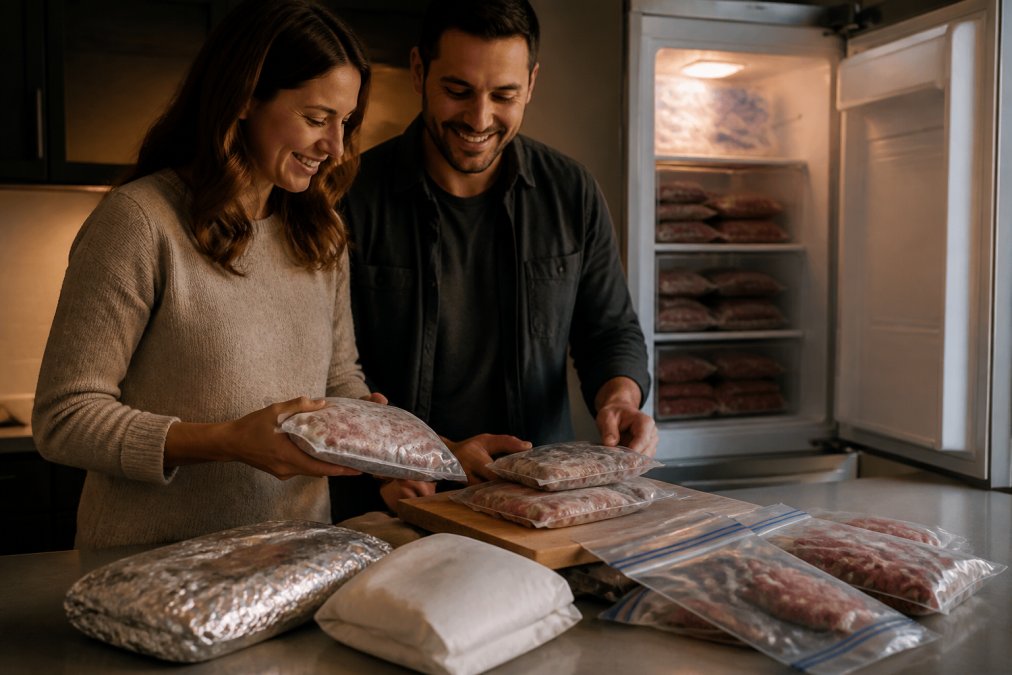
Vacuum sealing removes all air, preventing oxidation, dehydration, and freezer burn. Vacuum-sealed meat lasts 2-3 times longer than manually wrapped meat.
Vacuum sealers cost $40-150 and bags cost more than regular freezer bags. For occasional freezing, manual wrapping works fine; for weekly freezing, a sealer pays for itself in reduced waste.
Manual wrapping with heavy-duty foil or freezer paper works well for short-term storage (3-6 months). Double-wrap to create an effective barrier against moisture loss and oxidation.
Freezer paper (plastic side facing meat) blocks moisture better than foil and is easier to label. Use heavy-duty aluminum foil, not standard foil.
Airtight Sealing Methods That Work
Airtight sealing is the core principle; any method that removes air and prevents moisture exchange works.
Resealable freezer bags work when sealed properly. Use the water-displacement method: slowly lower the sealed bag into water to push air out, then seal just as it touches the surface.
For foil or freezer paper, wrap tightly with no gaps, then wrap again with a second layer. Label the outside layer so you don't have to unwrap it to read the label.
How to Prevent Freezer Burn on Meat
Freezer burn is ice crystal formation on the meat's surface, appearing as white or gray patches. It damages texture and flavor but doesn't make meat unsafe. Prevention is far easier than dealing with it after it happens.
Freezer burn occurs when surface moisture evaporates and refreezes as ice crystals. This accelerates when meat is exposed to air or when freezer temperature fluctuates.
Three factors cause freezer burn: air exposure, temperature fluctuations, and time. You control all three.
Moisture Loss and Quality Degradation
Moisture loss changes the texture of frozen meat. As water evaporates and refreezes as ice crystals, the meat becomes drier and tougher when cooked. The muscle fibers lose their ability to retain moisture during cooking.
Quality degradation is gradual. Meat doesn't go bad suddenly; it slowly loses quality over months. The longer meat stays frozen, the more water it loses. This is why storage duration matters.
Oxidation also causes quality loss. When meat is exposed to air, the fat oxidizes and develops off-flavors. This appears as discoloration on the surface. Oxidized meat is safe to eat but tastes rancid.
Prevent both by removing air completely and maintaining consistent freezer temperature. Vacuum sealing prevents both problems simultaneously. Manual wrapping with multiple layers also works, though it's less effective.
Temperature consistency matters more than people realize. A freezer that fluctuates between -5°C and 0°C causes more damage in three months than a stable -18°C freezer does in a year. Invest in a good freezer and check the temperature regularly.
How Long Does Meat Last in the Freezer
Storage duration depends on the type of meat and how well you packaged it. Raw meat lasts longer than cooked meat. Fatty cuts last shorter than lean cuts.
Storage Duration for Raw vs. Cooked Meat
Raw meat storage times:
- Beef steaks and roasts: 6-12 months
- Ground beef: 3-4 months
- Chicken pieces: 9 months
- Whole chicken: 12 months
- Pork chops: 4-6 months
- Pork roasts: 4-12 months
- Lamb: 6-9 months
- Fish: 6-8 months
Cooked meat storage times:
- Cooked beef: 2-3 months
- Cooked chicken: 2-3 months
- Cooked pork: 2-3 months
- Cooked ground meat: 2-3 months
These timelines assume proper packaging (vacuum sealed or heavy-duty wrapping) and consistent -18°C freezer temperature. Meat stored in regular plastic bags or with air pockets will degrade faster.
Fatty cuts degrade faster than lean cuts. Beef brisket, pork belly, and fatty fish oxidize quickly. Lean cuts like sirloin, chicken breast, and cod last longer. This is why fatty cuts should be consumed within the shorter end of the range.
Cooked meat lasts shorter because cooking breaks down muscle fibers. The exposed surface area is larger, so oxidation happens faster. Cooked meat also contains bacteria that freezing doesn't kill; it just pauses their growth. When you thaw cooked meat, bacteria can resume growing if the meat isn't handled properly.
Safe Thawing Methods That Preserve Quality
How you thaw meat matters as much as how you freeze it. Wrong thawing methods introduce bacteria and degrade quality. Three safe methods exist: refrigerator thawing, cold water thawing, and cooking from frozen.
Refrigerator thawing is safest and produces the best results. Move meat from freezer to refrigerator 24 hours before cooking.
Common Mistakes to Avoid
Most people make the same freezing mistakes repeatedly. These errors reduce meat quality and sometimes create food safety risks.
Frequently Asked Questions
How long can you safely keep meat in the freezer?
Raw beef, pork, and lamb stay safe for 6-12 months at -18°C (0°F) or below. Poultry lasts 9-12 months, while ground meat keeps for 3-4 months. Cooked meat has a shorter shelf life of 2-3 months. These timelines assume proper packaging to prevent freezer burn and oxidation. Always label meat with the date frozen so you use older portions first and maintain food safety.
What is the best way to prevent freezer burn on meat?
Freezer burn occurs from moisture loss and ice crystal formation when meat is exposed to air. Use airtight packaging methods like vacuum sealing, heavy-duty aluminum foil overwrap, or freezer paper to create a barrier against temperature fluctuations. Remove as much air as possible before sealing, and store meat in the coldest part of your freezer away from the door. Double-wrapping adds extra protection for long-term storage.
Is it safe to refreeze meat that has been thawed?
Yes, you can safely refreeze meat if it was thawed in the refrigerator at 4°C (40°F) or below and has not been left at room temperature for more than 2 hours. However, refrozen meat may experience some quality degradation and texture changes due to moisture loss. To minimize this, thaw only the portions you plan to use immediately. If meat thawed on the counter or shows signs of spoilage, discard it rather than refreezing.
Should I remove meat from its original packaging before freezing?
Grocery store packaging is often not designed for long-term freezer storage and allows air exposure that leads to freezer burn. For meat you plan to freeze beyond a few weeks, rewrap it in food-grade freezer paper, vacuum-seal bags, or airtight containers. If freezing immediately after purchase for short-term use (2-3 weeks), original packaging is acceptable. Rewrapping takes extra time but significantly extends shelf life and preserves quality, especially for premium proteins.


