TruLocal Alternatives: Best Online Meat Delivery
Table of Contents
- Why Canadians Are Switching From TruLocal to Specialized Meat Delivery Services
- Best Online Meat Delivery Services in Canada: Feature Comparison
- Door To Table: Hyperlocal Quality and Reliability
- Northern Raised: Farm-to-Table Transparency
- Papa Earth and Ravenwood Acres: Customization and Sustainability
- Meat Subscription Box Options in Alberta: What Sets Them Apart
- How to Choose: Storage, Freezer Space, and Flexibility
- Conclusion
- Frequently Asked Questions
Last Updated: September 23, 2026
Why Canadians Are Switching From TruLocal to Specialized Meat Delivery Services
When you're shopping for premium proteins, the standard grocery store experience falls short. Limited selection, inconsistent quality, and no transparency about sourcing leave families guessing whether they're getting what they actually paid for. That's where online meat delivery services step in, offering something grocery stores simply can't match: direct access to restaurant-grade cuts sourced from Canadian farms.
The shift toward TruLocal alternatives reflects a broader change in how Canadian families think about food. People want to know where their beef comes from, how the animals were raised, and whether the proteins they're serving are worth the investment. A meat subscription box removes the guesswork. Instead of hunting through aisles for the best cuts, you get curated selections delivered to your freezer in flash-frozen packaging designed to lock in peak freshness.
This guide breaks down the best online meat delivery options available to Canadian families, with a focus on what sets each service apart. Whether you're looking for hyperlocal sourcing, maximum customization, or sustainability-focused farming practices, there's a service built for how you actually eat.
Best Online Meat Delivery Services in Canada: Feature Comparison
The meat subscription box market has matured significantly. Services now compete on sourcing transparency, customization options, delivery flexibility, and the quality standards they maintain. Here's how some providers stack up:
| Service | Sourcing Focus | Customization | Delivery Model | Best For |
|---|---|---|---|---|
| Door To Table | Alberta beef, free-range chicken, 95% Canadian seafood | Pre-curated boxes | Edmonton, Fort McMurray area | Families wanting hyperlocal reliability |
| Northern Raised | Pasture-raised, hormone-free, antibiotic-free | Subscription boxes | Nationwide | Transparency-focused buyers |
| Papa Earth | Grass-fed beef, wild-caught fish, free-run poultry | Fully customizable | Multiple provinces | Home cooks wanting control |
| Ravenwood Acres | Regenerative farming, artisanal products | Monthly themed boxes | Nationwide | Environmentally conscious families |
Each service prioritizes different strengths. Some excel at sourcing stories. Others focus on customization. A few emphasize sustainability. Your choice depends on which factors matter most to your household.
Door To Table: Hyperlocal Quality and Reliability
Door To Table operates with a clear focus: serve Edmonton, surrounding areas, and Fort McMurray with restaurant-grade proteins that don't compromise on sourcing or freshness. This hyperlocal approach means the company can offer consistent, reliable delivery to specific regions.
The sourcing model here is straightforward. Alberta-raised beef, free-range chicken, and 95% Canadian-sourced seafood arrive in portion-controlled, flash-frozen packaging. Flash-freezing locks in peak freshness immediately after processing, which means the protein you thaw weeks later tastes as good as it would on the day it was prepared. Government-inspected facilities ensure safety standards are met at every step.
What separates this service from broader alternatives is the regional focus itself. National meat subscription box services optimize for scale. Door To Table optimizes for reliability in specific markets. Families in Edmonton and Fort McMurray get responsive customer service, and sourcing relationships built on proximity rather than logistics networks.
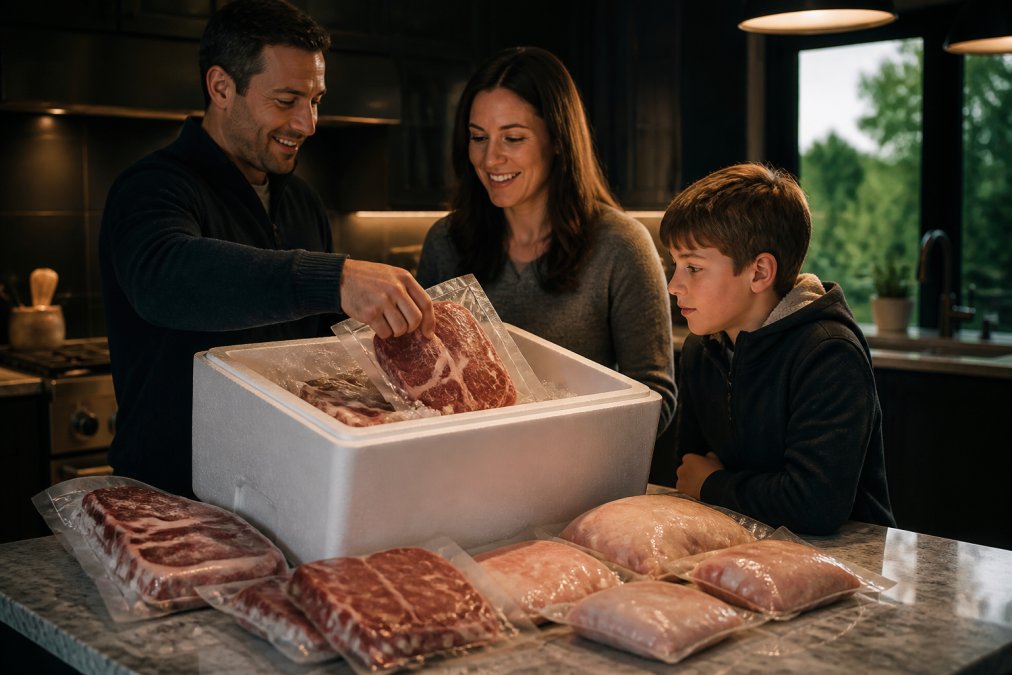
The portion-controlled packaging deserves emphasis here. Rather than receiving bulk cuts that require planning and portion management, you get pre-sized servings ready for the freezer. This approach reduces waste and makes meal planning simpler for families juggling busy schedules.
Northern Raised: Farm-to-Table Transparency
Northern Raised built its reputation on transparency about sourcing. The service works directly with Canadian family farms, and the company makes that relationship visible. Each meat subscription box includes information about the farms that produced your proteins, which appeals to buyers who want to see the full supply chain.
Pasture-raised, hormone-free, and antibiotic-free meat forms the core of Northern Raised's offering. This sourcing standard costs more than conventional meat, but the tradeoff is animals raised in conditions that align with how many Canadian families believe food should be produced.
The service ships nationwide, which means families outside major urban centers can access online meat delivery with the same sourcing standards as city residents. Flexible delivery scheduling lets you pause, skip, or adjust boxes without penalty, which matters for smaller households or families with variable consumption patterns.
Papa Earth and Ravenwood Acres: Customization and Sustainability
Papa Earth takes a different approach: maximum customization. Rather than receiving pre-curated boxes, you select exactly which cuts you want. This flexibility appeals to home cooks with specific preferences, if you only cook with ground beef and chicken breasts, you're not paying for cuts you won't use.
Grass-fed beef, wild-caught fish, and free-run poultry form the sourcing base. The meat subscription box starts at a higher price point than some competitors, but the ability to customize means you're paying only for what you'll actually cook. Delivery covers multiple provinces, and the no-contract model means you can cancel or pause without commitment.
Ravenwood Acres emphasizes regenerative farming practices. This sourcing standard goes beyond "hormone-free" or "pasture-raised", regenerative farming actively improves soil health and ecosystem function while producing meat. Monthly boxes include 10+ meal portions, with variety built in to expose families to different cuts and preparations.
Both services appeal to different buyer profiles. Papa Earth suits home cooks who want control. Ravenwood Acres suits families prioritizing sustainability as a core value.
Meat Subscription Box Options in Alberta: What Sets Them Apart
Alberta's beef reputation is global, but that advantage only translates to your table if the service has real sourcing relationships in the province. The difference between a hyperlocal provider and a national service that happens to ship to Alberta comes down to three concrete factors: sourcing radius, delivery speed, and supply chain transparency.
Sourcing radius and freshness. Door To Table sources Alberta beef from farms within a tight geographic radius of Edmonton and Fort McMurray. This proximity means protein moves from farm to processing to your freezer in days, not weeks. Flash-freezing happens immediately after processing, locking in peak freshness before any long-distance transport. National services, by contrast, consolidate products from multiple provinces at distribution centers before shipping. A box might contain Alberta beef, Atlantic seafood, and Ontario chicken, variety is the trade-off for slower delivery.
How to Choose: Storage, Freezer Space, and Flexibility
Choosing a meat subscription service requires honest assessment of three practical factors that most guides mention but rarely quantify: freezer capacity, actual cost per meal, and cancellation flexibility. Getting these wrong means the service sits unused or creates logistical stress.
-
Pause vs. cancel: Can you pause a box without canceling the subscription? A pause lets you skip one or two months without losing your account. A service that forces you to cancel and re-sign up is adding friction intentionally.
-
Notice period: How much advance notice do you need to pause or cancel? Services that require 7-10 days' notice are standard. Services requiring 30 days are restrictive.
-
Cancellation process: Can you pause or cancel online, or do you have to email or call? Online self-service is a sign the company respects your time.
-
No-penalty adjustments: Can you change box size, frequency, or contents without penalty? Flexibility here matters if your household needs change.
-
Grass-fed beef costs 20-30% more than grain-fed but has a different nutrient profile (higher omega-3s, higher conjugated linoleic acid). If this matters to you, it's worth the premium. If you're indifferent, conventional beef is fine.
-
Pasture-raised poultry costs more than cage-free but reflects different farming practices. The taste difference is noticeable to some people, not to others.
-
Antibiotic-free is a baseline standard now; most premium services offer it. Don't pay extra for it, expect it.
-
Regenerative farming is the most expensive standard because it requires different land management practices. Choose this only if environmental impact is a core value.
Conclusion
The shift from generic grocery store proteins to specialized online meat delivery reflects a change in what Canadian families expect from their food. You want to know where it comes from. You want it fresh. You want it convenient.
Frequently Asked Questions
What should I look for in a meat delivery service?
Prioritize sourcing transparency, flash-freezing methods, delivery reliability, and portion control. Verify that the service sources from Canadian farms and ranchers, uses government-inspected facilities, and offers flexible subscription options. Check whether the meat is grass-fed, antibiotic-free, or hormone-free based on your health priorities. Confirm delivery frequency matches your household size and freezer space.
How does flash-freezing affect the quality of delivered meat?
Flash-freezing locks in nutrients and flavor at peak freshness by rapidly reducing temperature, preventing large ice crystals that damage cell structure. This preserves tenderness and nutritional integrity. When thawed properly, flash-frozen meat maintains restaurant-grade quality. The key difference from grocery store meat is timing: your protein is frozen within hours of processing, not days later.
Is it more cost-effective to use a meat delivery service or shop at the grocery store?
Cost depends on your priorities. Delivery services may cost more per pound but offer premium quality, ethical sourcing, portion control, and convenience. Calculate your cost-per-meal by dividing box price by number of servings. Many families find the value justifies the premium when factoring in reduced food waste, restaurant-grade cuts, and time saved on grocery shopping and meal planning.
What are the benefits of choosing Alberta-raised beef?
Alberta beef is known for superior marbling, tenderness, and flavor due to the region's ranching practices and feed quality. Supporting local producers strengthens your regional food system and ensures traceability from farm to table. Alberta-raised beef often meets higher animal welfare standards and comes with transparent sourcing you can verify, giving you confidence in what your family eats.
Are there local alternatives to national meat subscription boxes?
Yes. Hyperlocal services focus on specific regions and offer personalized service, faster delivery, and direct relationships with nearby farmers and ranchers. These alternatives often provide greater flexibility in subscription frequency, customization, and cancellation policies compared to large national providers. Local services also reduce shipping time and environmental impact while supporting your regional agricultural community.


