Frozen vs Fresh Meat Quality: What Actually Matters

Table of Contents
- Frozen vs Fresh Meat Quality: The Real Difference
- How Flash Freezing Preserves Meat at Peak Quality
- Why Grocery Store 'Fresh' Meat May Not Be Fresher
- How to Thaw Meat Safely and Maintain Quality
- CFIA Meat Inspection Standards and What They Mean for Quality
- Flavor, Texture, and Cooking Performance: Fresh vs Frozen
- Economic and Environmental Considerations
- Conclusion: Making the Right Choice for Your Family
- Frequently Asked Questions
Last Updated: September 25, 2026
Frozen vs Fresh Meat Quality: The Real Difference
When you're buying meat for your family, understanding frozen vs fresh meat quality isn't always about what's sitting in the refrigerated case versus what's in the freezer. It's about what actually matters for quality, safety, and nutrition. The science behind frozen versus fresh meat quality has shifted dramatically over the past decade, and most grocery shoppers haven't caught up. (Source: Food and Agriculture Organization of the United Nations (FAO))
Flash-frozen meat can actually preserve quality better than fresh meat that's been sitting in transit and storage for days. The key difference lies in how freezing is done and when it happens. At Door To Table, we flash-freeze proteins at peak freshness, locking in nutritional value, texture, and flavor the moment they're ready. This approach to frozen versus fresh meat quality challenges what many people assume about the grocery store.
Here's what actually separates high-quality frozen meat from truly fresh meat, and why the distinction matters more than you think.
How Flash Freezing Preserves Meat at Peak Quality
Flash freezing, also called IQF (individually quick frozen), is a process that locks meat at its peak quality by rapidly lowering temperature to below -18°C. This happens within hours of processing, not days later like conventional freezing.
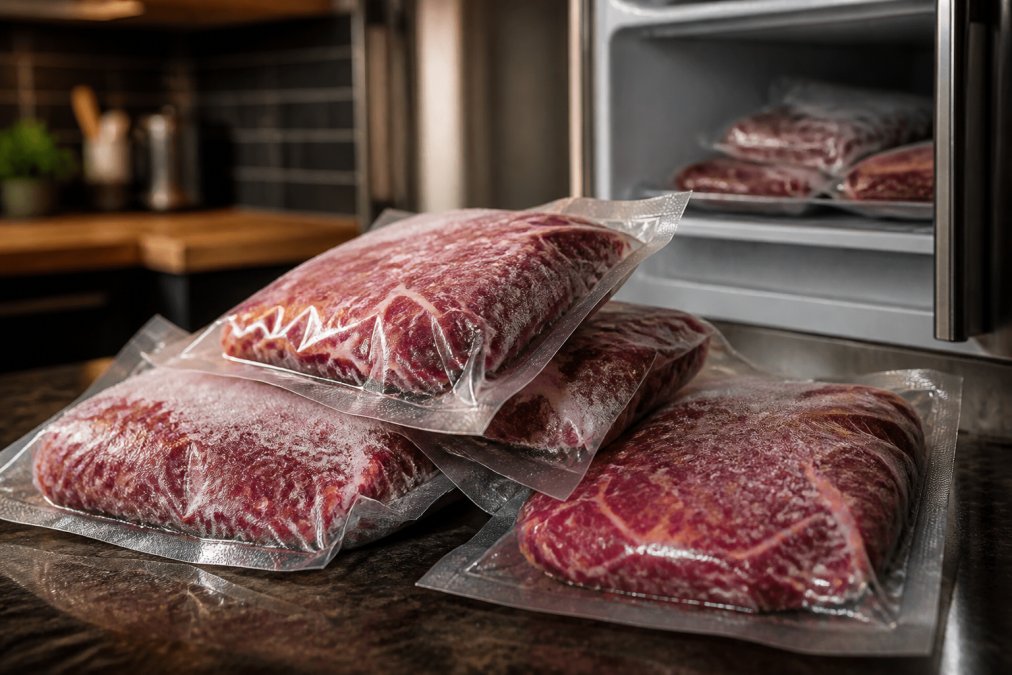
The speed matters. When meat freezes slowly, large ice crystals form inside muscle fibers. These crystals rupture cell walls, causing moisture loss when the meat thaws. Flash freezing creates tiny ice crystals that cause minimal cellular damage. The result is meat that retains its texture, juiciness, and nutritional profile far better than slowly frozen alternatives.
Ice Crystal Formation and Cellular Integrity
The difference between frozen versus fresh meat quality comes down to what happens at the cellular level. When water inside muscle tissue freezes slowly, it expands and damages the cell structure. This is called ice crystal formation, and it's the enemy of meat quality.
Flash freezing minimizes this damage. The rapid temperature drop creates small ice crystals that don't rupture muscle fiber walls. When you thaw the meat later, you lose far less moisture, what the industry calls drip loss. Meat frozen this way cooks more evenly and retains its natural tenderness and elasticity.
Conventional grocery store freezing often happens over 24-48 hours, allowing larger crystals to form. The difference in eating quality is noticeable: flash-frozen meat stays juicier and more tender when cooked.
Nutritional Value Retention
Frozen versus fresh meat quality isn't just about texture. Nutritional value matters equally. Flash freezing preserves protein, vitamins, and minerals at the moment of freezing. Studies consistently show that properly frozen meat retains 95% or more of its nutritional profile.
Fresh meat, by contrast, begins losing nutrients the moment it's processed. Oxidation and microbial activity degrade vitamins and proteins over time. Meat sitting in a grocery store case for 3-5 days loses measurable nutritional value compared to meat flash-frozen within hours of processing.
This is especially true for omega-3 fatty acids in seafood and fat-soluble vitamins in beef. Freezing stops oxidation cold, preserving these nutrients far longer than refrigeration alone.
Why Grocery Store 'Fresh' Meat May Not Be Fresher
Here's where the narrative around frozen versus fresh meat quality breaks down: the meat in your grocery store's refrigerated case isn't necessarily fresher than frozen meat.
That steak or chicken breast has likely traveled from a processing facility to a distribution center to a regional warehouse to your store. The entire cold chain takes 5-10 days on average. During that time, the meat is aging in refrigeration, losing moisture, developing surface oxidation, and beginning to lose nutritional value.
Flash-frozen meat, by contrast, is frozen at peak quality within hours of processing. It's then shipped in a maintained cold chain and arrives at your door ready to cook. From a freshness standpoint, flash-frozen meat is often fresher than what's labeled "fresh" in the grocery aisle.
The confusion stems from marketing language. "Fresh" sounds better than "frozen," but freshness is about time since processing, not whether something is refrigerated or frozen. Frozen versus fresh meat quality depends entirely on when the freezing happens and how it's done.
How to Thaw Meat Safely and Maintain Quality
Thawing is where many people accidentally destroy the quality they paid for. The wrong method causes significant drip loss and creates food safety risks.
Thawing Methods and Food Safety
The safest thawing method is refrigerator thawing. Place meat on a plate in the coldest part of your fridge and allow 24 hours for every 2.5 cm of thickness. This slow thaw minimizes drip loss and keeps the meat in the food safety zone throughout.
Cold water thawing works faster. Seal the meat in a bag and submerge it in cold water, changing the water every 30 minutes. This method takes 1-2 hours depending on thickness, and it maintains food safety as long as water temperature stays below 10°C.
Never thaw meat on the counter. Room temperature allows bacteria to multiply rapidly in the outer layers while the center remains frozen. This creates serious food safety risks.
Microwave thawing is acceptable only if you cook the meat immediately afterward. Microwaves thaw unevenly, potentially bringing outer portions into the danger zone while centers remain frozen.
Preventing Drip Loss and Moisture Degradation
Drip loss, the moisture that seeps out during thawing, is where frozen versus fresh meat quality becomes visible. Proper thawing minimizes this.
Refrigerator thawing produces the least drip loss because the slow temperature change allows muscle fibers to reabsorb moisture gradually. Cold water thawing comes second. Microwave thawing causes the most drip loss because rapid temperature changes rupture partially thawed cells.
Once thawed, cook meat within 24-48 hours.
CFIA Meat Inspection Standards and What They Mean for Quality
Canada's food safety system is built on inspection standards set by the Canadian Food Inspection Agency (CFIA). These standards apply equally to fresh and frozen meat, but understanding them helps you evaluate quality claims.
Flavor, Texture, and Cooking Performance: Fresh vs Frozen
When it comes to actual eating experience, frozen versus fresh meat quality depends on how each was handled before reaching your kitchen.
| Quality Factor | Flash-Frozen Meat | Fresh Meat (Grocery Store) |
|---|---|---|
| Cellular Integrity | Minimal ice crystal damage | Potential damage from slow freezing or extended storage |
| Nutritional Retention | 95%+ preserved at freeze point | Gradual loss during 5-10 day cold chain |
| Drip Loss After Thawing | Minimal (5-8%) | Moderate to high (10-15%) |
| Flavor Profile | Peak freshness locked in | Oxidation and microbial activity over days |
| Cooking Evenness | Superior (consistent moisture) | Variable (depends on storage duration) |
| Shelf Life | 6-12 months frozen | 3-5 days refrigerated |
Economic and Environmental Considerations
Frozen versus fresh meat quality discussions rarely address the environmental and economic trade-offs of different supply chains. Most competitors focus on waste reduction alone, but the full picture is more nuanced and reveals a significant advantage for locally sourced, flash-frozen meat.
The Hidden Cost of Grocery Store "Fresh" Meat
Cold Chain Efficiency and Carbon Footprint
- Temperature-controlled trucks from processing facility to regional distribution center
- Climate-controlled warehouse storage (often 5-10 days)
- Constant refrigeration in store cases (24/7, with frequent door openings)
- Customer transport home in non-insulated vehicles
Local Sourcing and Transportation Emissions
Economic Reality for Households
- Reduced waste: Grocery store meat spoilage costs families an average of $200-400 annually; frozen meat eliminates this loss
- Portion control: Buying exactly what you need prevents overbuying
- Shelf life: A 6-12 month freezer life means less frequent shopping and fewer impulse purchases
- Cooking efficiency: Flash-frozen meat cooks more evenly, reducing the risk of overcooking and wasting an expensive cut
Conclusion: Making the Right Choice for Your Family
The frozen versus fresh meat quality debate has a clear answer when you look at the science: method and timing matter far more than the frozen-or-fresh label.
Frequently Asked Questions
Does freezing meat change the quality or nutritional value?
When frozen quickly at peak freshness, meat retains virtually all its nutritional value and protein content. Flash freezing locks in peak quality by minimizing ice crystal formation, which prevents cellular damage. Properly frozen meat maintains palatability and tenderness comparable to fresh meat when thawed correctly. The key difference is timing: meat frozen immediately after slaughter preserves more nutrients than meat that sits on a grocery store shelf for days before freezing.
What is the difference between flash-frozen and standard grocery store frozen meat?
Flash-frozen meat is frozen at extremely low temperatures (often cryogenic) within hours of processing, creating tiny ice crystals that minimize cellular damage. Standard grocery store frozen meat is typically frozen more slowly, allowing larger ice crystals to form, which can rupture muscle fibers and cause drip loss during thawing. Flash-frozen meat maintains better texture, flavor, and moisture retention. The difference becomes obvious when you compare tenderness and juiciness after cooking.
How do I know if meat has freezer burn, and does it affect quality?
Freezer burn appears as gray-brown patches or white frost on meat surfaces, caused by moisture loss and oxidation. It indicates cellular damage and affects flavor and texture, though it is not a food safety risk. Vacuum-sealed packaging and consistent freezer temperatures prevent freezer burn. Properly frozen meat in sealed packaging maintains peak quality for months without visible degradation, whereas meat exposed to temperature fluctuations or air develops freezer burn quickly.
Why is flash-frozen meat often considered fresher than 'fresh' meat at the counter?
Grocery store 'fresh' meat can spend 7-10 days in the cold chain before reaching your table, during which time autolysis (natural enzyme breakdown) and microbial growth begin. Flash-frozen meat is frozen within hours of slaughter, stopping these processes immediately. When thawed properly, flash-frozen meat is biologically fresher and safer because it has spent minimal time in conditions where spoilage organisms can multiply. This is why flash-frozen meat often has superior organoleptic properties (taste, texture, appearance) compared to counter meat.
Stop guessing about meat quality at the grocery store. Get started with Door To Table and build a freezer stocked with restaurant-grade proteins your family will actually enjoy.


