Best Ways to Thaw Steak: Safe Methods
Table of Contents
- Why Thawing Steak Properly Matters
- Refrigerator Thawing: The Best Method
- Thawing Steak in Cold Water: The Quick Method
- Microwave Defrosting: When You're Short on Time
- Cooking Steak from Frozen: No-Thaw Approach
- How to Store Portioned Meat After Thawing
- Food Safety Guidelines and Common Mistakes
- Frequently Asked Questions
Last Updated: September 20, 2026
Best Ways to Thaw Steak: Safe Methods
Thawing steak the wrong way can ruin texture, lose moisture, and create food safety risks. The good news? Proper thawing takes just a few hours and makes a real difference in how your meat cooks.
At Door To Table, we deliver flash-frozen, restaurant-grade beef straight to your freezer. Knowing how to thaw steak safely ensures you get the most from every cut. Below, we'll show you exactly how to thaw steak using methods that preserve quality and keep your family safe.
Why Thawing Steak Properly Matters
How you thaw steak determines whether it stays juicy or dries out. Improper thawing also creates conditions where harmful pathogens can multiply.
The danger zone is the temperature range where bacteria grow fastest: between 4°C and 60°C. Thawing steak at room temperature or on the countertop pushes meat through this zone for too long. Even a few hours of exposure can lead to foodborne illness.
Proper thawing keeps meat out of the danger zone. It also preserves the ice crystals that form during flash-freezing. When ice crystals rupture, they release moisture. The slower you thaw, the less moisture loss. That means better texture and flavor when you sear.
Refrigerator Thawing: The Best Method
Refrigerator thawing is the safest way to thaw steak. It keeps meat cold throughout the entire process and produces the best results.
How to thaw steak in the refrigerator:
- Place your frozen steak on a plate or in a shallow dish
- Set it on the lowest shelf of your fridge (where it's coldest)
- Leave it for 12-24 hours, depending on thickness
- Once thawed, use the steak within 1-2 days
Thick cuts like ribeye or New York strip need closer to 24 hours. Thinner cuts like skirt steak thaw in 12-16 hours.
The refrigerator method works because it thaws steak slowly and safely. The meat never enters the danger zone. Your fridge keeps everything at safe temperatures while the steak gradually softens.
One thing to watch: make sure packaging stays sealed. If the vacuum seal breaks, moisture can escape and bacteria can enter. Check your Door To Table packaging before thawing to confirm the seal is intact.
Thawing Steak in Cold Water: The Quick Method
Cold water immersion is faster than refrigerator thawing. It takes 1-2 hours instead of a full day, making it perfect when you didn't plan ahead.
How to thaw steak in cold water:
- Keep the steak in its vacuum-sealed packaging
- Submerge it completely in a bowl or sink of cold water
- Change the water every 30 minutes to keep it cold
- Check for doneness after 1 hour for thin cuts, 2 hours for thick cuts
The vacuum seal is critical here. If packaging integrity is compromised, water seeps in and ruins the meat. Door To Table's flash-frozen cuts arrive in leak-proof packaging designed for this exact purpose.
Cold water thawing works fast because water transfers heat much more efficiently than air. The constant water changes prevent the water from warming up. This keeps the steak in a safe temperature range the whole time.
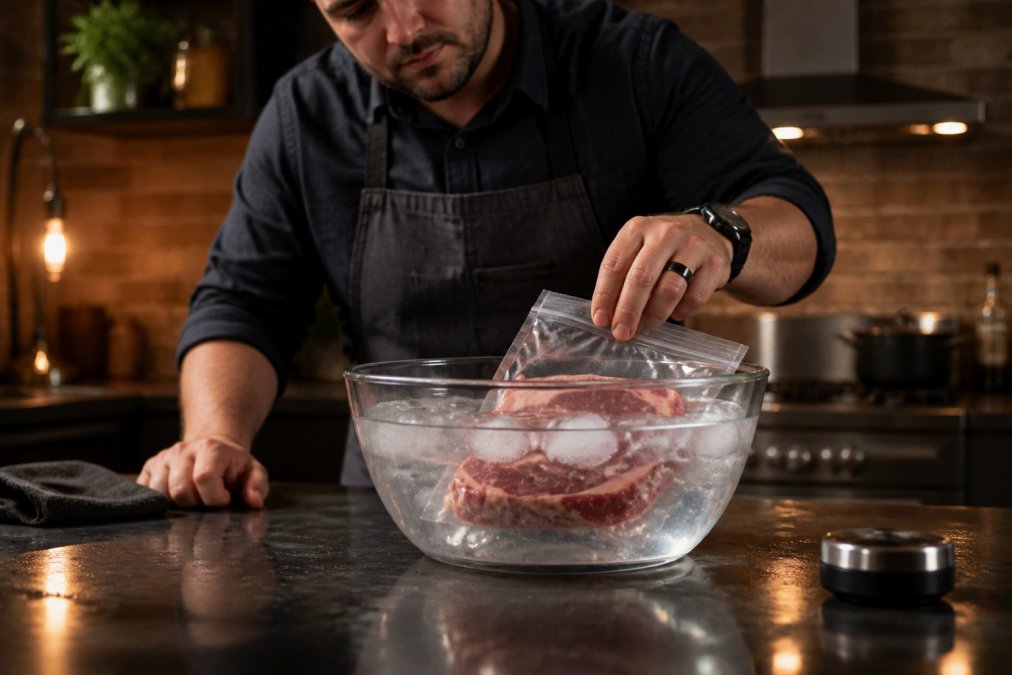
The difference between this method and room temperature thawing is huge. Room temperature lets the outside warm up while the inside stays frozen. Cold water thaws evenly from all sides. You get better texture and zero food safety risk.
Microwave Defrosting: When You're Short on Time
Microwave defrosting thaws steak in 10-15 minutes, making it tempting when you're short on time. However, this method comes with significant trade-offs that affect the final result.
How to safely microwave defrost steak:
- Place the steak on a microwave-safe plate
- Use the defrost setting (usually 30% power)
- Check and rotate every 2-3 minutes to promote even thawing
- Stop as soon as the steak is thawed (do not let edges begin to cook)
- Cook immediately after thawing
Why microwave thawing compromises quality:
Microwave energy heats water molecules unevenly. The outer edges of the steak warm quickly while the center remains frozen. This creates a temperature gradient that causes the outer muscle fibers to begin denaturing (breaking down) before the interior has fully thawed. The result is uneven moisture loss and a mushy texture on the surface when you sear.
Additionally, microwave thawing accelerates the passage through the danger zone (4°C to 60°C). The edges can reach unsafe temperatures while the center is still frozen, creating a window where bacteria can multiply on the surface. This is why cooking immediately after microwave thawing is non-negotiable; you cannot safely refrigerate the steak afterward.
A better emergency alternative:
If you have 1-2 hours instead of 12, cold water immersion is dramatically superior to the microwave. Submerge the vacuum-sealed steak in cold water and change the water every 30 minutes. This thaws evenly, keeps the entire steak safely below 15°C, and preserves texture far better than microwave defrosting. The steak remains in its sealed packaging, preventing contamination and moisture loss. (Source: consumer reports on meat thawing)
Cooking Steak from Frozen: No-Thaw Approach
You can cook steak directly from frozen and achieve good results, but success depends on understanding how ice crystals affect the searing process and which cuts work best with this method.
How to cook frozen steak:
- Remove packaging and pat the surface completely dry with paper towels
- Season generously with salt and pepper (seasoning adheres better to dry surfaces)
- Heat your pan or grill to high temperature until it just begins to smoke
- Sear the frozen steak for 2-3 minutes per side without moving it
- Reduce heat to medium and cook until the internal temperature reaches your target (add 50% more time than thawed steak)
- Rest for 5-10 minutes before serving
The science behind frozen cooking:
When steak freezes, water inside the muscle cells forms ice crystals. These crystals create a barrier that slows heat penetration. When you sear a frozen steak, the exterior reaches high temperature while the interior thaws slowly. This two-stage process can work in your favor: the crust develops while the inside cooks gently, reducing the risk of overcooking the center.
However, there's a catch. The ice crystals rupture as the steak thaws, releasing moisture. If you don't sear aggressively enough, this moisture pools on the surface and prevents browning. A properly heated pan and dry surface are essential.
Cut-specific guidance:
- Thin cuts (skirt, flank, flat iron under 2.5 cm): Frozen cooking works well. The thin profile thaws quickly, and the sear is even. These cuts benefit from the gentle interior cooking.
- Medium cuts (strip steak, sirloin, 2.5-3.8 cm): Acceptable but requires careful heat management. Sear hard for 3-4 minutes per side, then reduce heat. Monitor internal temperature closely to avoid a grey band around the edges.
- Thick cuts (ribeye, porterhouse, T-bone over 3.8 cm): Not recommended. The exterior will char before the center reaches medium-rare. The temperature gradient is too steep. Thaw these cuts first.
Post-sear preparation, the critical step most guides skip:
Once your frozen steak is cooked, resist the urge to slice immediately.
How to Store Portioned Meat After Thawing
Once you thaw steak, handle it like any fresh meat. Proper storage prevents contamination and keeps your family safe.
Storage guidelines after thawing:
- Use thawed steak within 1-2 days
- Store on the lowest shelf of your fridge
- Keep packaging sealed or transfer to an airtight container
- Never refreeze thawed steak (bacteria can multiply during thawing)
- Keep raw meat away from other foods to prevent cross-contamination
Food Safety Guidelines and Common Mistakes
Safe thawing temperatures:
| Method | Temperature | Time |
|---|---|---|
| Refrigerator | Below 4°C | 12-24 hours |
| Cold water | 4-15°C | 1-2 hours |
| Microwave | Variable | 10-15 minutes |
| Frozen cooking | Thaws during cooking | 50% longer |
Vacuum-sealed packaging matters more than most people realize. If the seal breaks during thawing, water enters and bacteria can contaminate the meat. Check your Door To Table packaging before and after thawing. Intact seals mean safe, quality meat.
Frequently Asked Questions
How long does it take to thaw a steak in the refrigerator?
Refrigerator thawing time depends on thickness. A 2.5 cm steak typically takes 12-24 hours, while thicker cuts (5 cm or more) may need 24-48 hours. This slow, steady method keeps the steak in the safe temperature range throughout thawing, preventing bacterial growth and maintaining meat quality. Plan ahead when using this method.
Is it safe to thaw steak in cold water?
Yes, cold water thawing is safe when done correctly. Submerge the vacuum-sealed steak in a leak-proof bag in cold water, changing the water every 30 minutes. A 2.5 cm steak thaws in 1-2 hours using this method. The continuous water circulation prevents the meat from entering the danger zone where pathogens multiply rapidly. Never use warm or room-temperature water.
Can you cook steak directly from frozen without thawing?
Yes, cooking steak from frozen is possible and can produce excellent results. Add 50% more cooking time and use lower heat initially to allow the interior to thaw gradually while the exterior develops a crust. The steak's internal temperature must reach 63°C for medium-rare. Thinner cuts may cook unevenly using this approach.
Why is room temperature thawing dangerous?
Countertop thawing allows the outer surface of the steak to warm into the danger zone (4°C to 60°C) where bacterial growth accelerates rapidly. Even though the interior remains frozen, pathogens on the surface can multiply to unsafe levels within 2 hours. This creates a serious foodborne illness risk. Always use refrigerator, cold water, or microwave methods instead.


