Bulk Meat Delivery for Families: A 2026 Guide
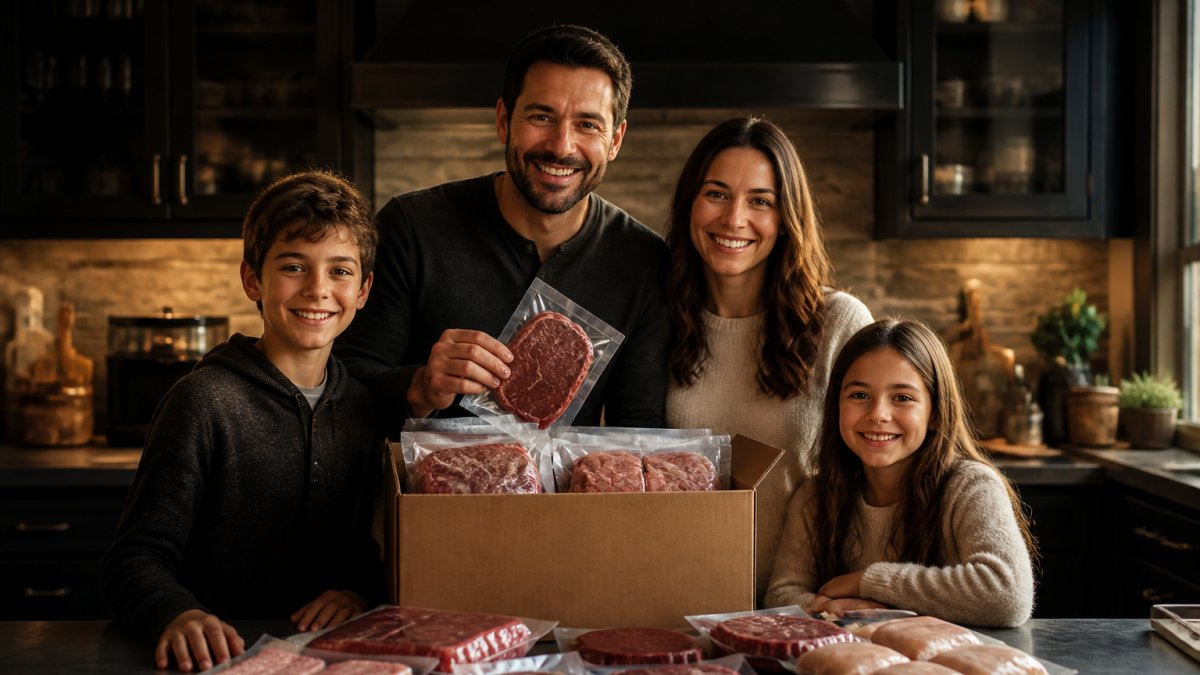
Table of Contents
- How Bulk Meat Delivery Works for Families
- Why Families Choose Bulk Meat Delivery
- How to Store Bulk Meat in a Chest Freezer
- Best Practices for Thawing Frozen Meat
- Benefits of Portion-Controlled Meat Cuts
- Customizing Your Meat Box and Order Frequency
- Quality, Freshness, and Sourcing Transparency
- Frequently Asked Questions
Last Updated: September 30, 2026
How Bulk Meat Delivery Works for Families
Bulk meat delivery for families has transformed how households approach protein sourcing. Instead of navigating crowded grocery store aisles, families now order restaurant-grade cuts online and receive flash-frozen portions delivered directly to their door. The process is straightforward: you browse available meat bundles, customize your selection based on your family's preferences, and schedule delivery for a time that works for you. (Source: Statistics Canada's data on household food expenditure)
Door To Table specializes in this model, sourcing 95% of products from Canada while maintaining government-inspected facilities. The flash-freezing process locks in peak freshness at the moment of packaging, meaning the meat arrives in your freezer at optimal quality. Portion-controlled packaging eliminates the guesswork of dividing bulk purchases yourself, so you get exactly what your family needs without waste.
The appeal extends beyond convenience. Families gain transparency about sourcing, knowing whether their beef comes from Alberta ranches or their chicken is truly free-range. This level of detail rarely exists in traditional grocery shopping, where origin information is often vague or absent entirely.
Why Families Choose Bulk Meat Delivery
Families gravitate toward bulk meat delivery for reasons that go beyond simple convenience. The shift reflects a deliberate choice to reclaim control over protein sourcing in an era when grocery store transparency is minimal and supply chains are opaque.
Cost predictability and meal-budget clarity rank high. Unlike grocery shopping where meat prices fluctuate weekly and package sizes vary, bulk delivery locks in consistent portion sizes and pricing. A family ordering monthly can forecast protein spending accurately, making it easier to stick to a food budget. Over a year, this predictability often reveals savings of 15-25% compared to weekly grocery store purchases, though the real value lies in eliminating impulse buys and reducing food waste rather than chasing the lowest per-pound price.
Sourcing transparency and local support matter deeply to families who've grown skeptical of conventional retail. When you know your beef comes from a specific ranch in Alberta or your chicken from a named farm practicing free-range protocols, you're making an informed choice rather than trusting vague "product of Canada" labels. This direct connection to producers resonates with parents who want their purchasing decisions to support domestic agriculture and ethical farming practices.
Reduced decision fatigue and meal-planning friction is underestimated. A freezer stocked with known quantities and consistent portion sizes shifts the weekly question from "What protein do we have?" to "How do we want to prepare it?" This subtle change removes a cognitive bottleneck in weeknight cooking. Parents with young children or demanding schedules particularly value this; the mental load of meal planning drops when protein variety and portions are already decided.
Quality consistency that grocery stores struggle to match is another draw. Flash-frozen meat arrives at peak freshness and stays that way for months when stored correctly. You're not racing against a display-case countdown or discovering that the "fresh" package you bought three days ago has already begun to degrade. For families cooking multiple meals per week, this reliability matters practically.
Access to cuts and proteins that grocery stores don't stock opens new cooking possibilities. Specialty cuts, heritage breeds, or specific preparations (like pre-portioned steak sizes) are often unavailable in conventional retail. Families discover new favorites through bulk delivery that they'd never attempt at a grocery store, expanding their cooking repertoire and reducing the monotony of rotation meals.
The combination of these factors—predictability, transparency, quality, and convenience—creates a compelling case that transcends price alone. Families choosing bulk delivery are optimizing for control and confidence, not just cost.
How to Store Bulk Meat in a Chest Freezer
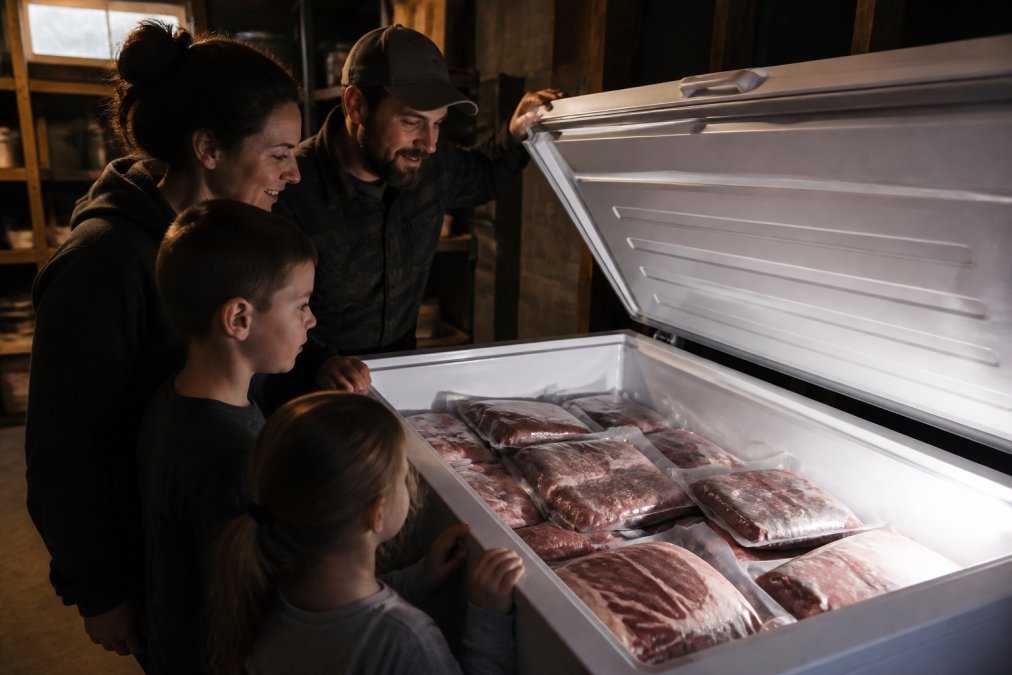
A chest freezer is essential infrastructure for bulk meat delivery. Most families underestimate how much space they actually have. A standard 7-cubic-foot chest freezer holds roughly 250 pounds of meat when properly organized.
Organization determines whether your freezer becomes a functional asset or a chaotic mess. Start by grouping meat by type: beef in one zone, chicken in another, seafood in a third. Within each category, arrange by cut. Ground beef toward the front (you'll use it most frequently), premium steaks toward the back (use less often, so deeper storage is fine).
Vacuum-sealed portions stack efficiently. Lay them flat rather than standing them upright; flat stacking maximizes vertical space and prevents freezer burn on exposed edges. Label everything with the cut, weight, and date received. A simple permanent marker on the package works fine, though some families use colored tape to mark different purchase dates.
Temperature consistency matters more than people realize. Keep your freezer at -18°C (0°F) or below. Fluctuations cause ice crystal formation, which degrades quality over time. Avoid opening the freezer frequently or leaving the lid open while deciding what to cook; each opening raises internal temperature and forces the compressor to work harder.
Most flash-frozen meat stays safe for 8-12 months at proper freezer temperature. Rotate older stock to the front and newer purchases to the back, using a first-in, first-out system. This prevents accidentally discovering forgotten packages months later.
Best Practices for Thawing Frozen Meat
How you thaw meat determines both safety and final quality. The safest method is refrigerator thawing: transfer the vacuum-sealed package from freezer to fridge and allow 24 hours for complete thawing. This maintains consistent cold temperature throughout the process, preventing bacterial growth.
The cold-water method works when you're short on time. Submerge the vacuum-sealed package in cold water, changing the water every 30 minutes. A typical steak thaws in 1-2 hours using this approach. The key is keeping the package sealed; opening it allows water to contact the meat directly, compromising texture and introducing contamination risk.
Never thaw meat on the counter at room temperature. Bacteria multiply rapidly in the danger zone between 4°C and 60°C (40°F and 140°F). Even if the center remains cold, the exterior reaches unsafe temperatures within 2-3 hours. This is where most home food-safety mistakes happen.
Once thawed, cook meat within 24-48 hours. Don't refreeze thawed meat unless you've cooked it first. If you thawed more than you need, cook the excess immediately and refrigerate the cooked portions for later use.
For ground beef, thawing is faster, usually 8-12 hours in the refrigerator. Because ground meat has more surface area, bacteria can penetrate more easily, so speed matters slightly more. Pat it dry with paper towels before cooking to improve browning and reduce splattering.
Benefits of Portion-Controlled Meat Cuts
Portion control sounds like a limitation until you actually experience it. Pre-portioned cuts eliminate the mental math of dividing a large package and reduce food waste significantly. A family of four receives four steaks rather than one massive package they must divide themselves.
This precision affects meal planning directly. You know exactly how much protein you're serving, making it easier to balance nutrition and calories. Parents can confidently serve appropriate portions to children without guessing whether they've given too much or too little.
Waste reduction is substantial. Grocery store packages often contain more meat than a family needs for a single meal, leading to either oversized portions or leftover meat that eventually spoils. Portion-controlled delivery eliminates this friction. You use what you receive; nothing sits in the fridge degrading.
The convenience extends to cooking. A pre-portioned steak cooks predictably; you know the thickness, weight, and shape, so timing becomes consistent. Compare this to grocery store packages where thickness varies within the same package, requiring different cooking times for different pieces.
Portion control also supports budget awareness. When you know you're receiving four chicken breasts rather than a five-pound package, you can track cost per meal more accurately. This transparency helps families make informed decisions about their protein spending.
Customizing Your Meat Box and Order Frequency
Flexibility in bulk ordering is essential because family needs shift seasonally, with appetite changes, and as you discover which cuts your household actually cooks. The best ordering frequency matches your freezer capacity, consumption rate, and meal-planning rhythm rather than following a one-size-fits-all schedule.
Understanding your consumption baseline is the starting point. A standard 7-cubic-foot chest freezer comfortably holds 250 pounds. The goal is to avoid overstocking (which wastes freezer space and risks quality degradation) while maintaining enough variety that meals don't feel repetitive.
Sample weekly meal plans using bulk cuts help visualize how a single delivery translates into actual dinners.
- Week 1: Two ribeye steaks (Monday, Thursday), three chicken breasts (Tuesday, Wednesday, Friday), one pound ground beef for tacos (Saturday), one pork chop package (Sunday).
- Week 2: One beef roast slow-cooked for two meals (Monday-Tuesday), four chicken breasts (Wednesday, Thursday, Friday), ground beef for pasta (Saturday), one steak (Sunday).
- Week 3: Repeat with different cuts, sirloin instead of ribeye, ground chicken instead of ground beef, to prevent meal fatigue.
- Week 4: Use remaining freezer stock, allowing flexibility for dining out or leftovers.
Quality, Freshness, and Sourcing Transparency
Sourcing transparency distinguishes premium bulk delivery from commodity meat services. Door To Table's commitment to 95% Canadian sourcing means you're supporting domestic agriculture while knowing exactly where your protein originates. Alberta beef comes from identifiable ranches, not anonymous distribution centers.
Frequently Asked Questions
What makes bulk meat delivery different from buying at a grocery store or warehouse club?
Bulk meat delivery services source from local farmers and ranchers, flash-freeze at peak freshness, and deliver portion-controlled cuts directly to your door. This eliminates grocery store guesswork and ensures consistent quality. Restaurant-grade proteins arrive ready to freeze, with transparent sourcing so you know exactly where your food comes from, something most grocery stores cannot guarantee.
How much freezer space do I need for a bulk meat order?
A chest freezer is ideal for bulk storage. Calculate your needs by considering your family size, meal frequency, and how long you want to store meat between deliveries. Most families find a dedicated chest freezer essential for bulk meat delivery.
What are the benefits of portion-controlled meat cuts for families?
Portion-controlled cuts eliminate waste, simplify meal planning, and ensure consistent serving sizes for your family. Pre-portioned packages save time on prep work and reduce the temptation to over-serve. They also make it easier to track nutrition and manage dietary goals, while reducing the stress of deciding how much meat to thaw for dinner.
How do I safely thaw frozen meat from bulk delivery?
The safest method is thawing in the refrigerator overnight, allowing 24 hours for most cuts. For faster thawing, use the cold-water method: seal meat in a bag and submerge in cold water, changing water every 30 minutes. Never thaw at room temperature, as this allows bacteria to multiply. Plan ahead by moving meat from freezer to fridge the night before cooking.


